
How Long Does a Kitchen Remodel Really Take?
One of the first questions homeowners in Hollywood ask when they start thinking about a kitchen remodel is simple: how long is this going to take? It's a fair question. Your kitchen is the most-used room in the house, and being without it for weeks — or longer — can feel daunting.
The truth is, a typical kitchen remodel takes anywhere from six to twelve weeks once construction begins, depending on the scope of work. But that number doesn't tell the whole story. There's a planning phase before demolition day, and there are factors that can speed things up or slow them down.
Here's a realistic, phase-by-phase look at what a kitchen remodel timeline looks like so you can plan accordingly and avoid surprises.
Phase 1: Design and Planning (2–4 Weeks)
Before any walls come down or tiles get pulled up, there's important groundwork to cover. This phase includes:
- Initial consultation and measurements — Your contractor visits your home, takes detailed measurements, and discusses your goals, budget, and style preferences.
- Design development — Whether you're reconfiguring the layout or keeping the same footprint, this is when cabinet styles, countertop materials, tile selections, and finishes get nailed down.
- Material ordering — Custom cabinetry, specialty tiles, and certain countertop materials can have lead times of two to six weeks. Ordering early keeps the project on track.
- Permits — Depending on the scope of your remodel, permits may be required in Hollywood. Electrical, plumbing, and structural changes typically need city approval before work begins.
This phase often feels slow because nothing visible is happening yet. But skipping or rushing the planning stage is the number one reason remodels go over budget and over schedule.
Phase 2: Demolition (2–4 Days)
Once materials are ordered and permits are in hand, demolition begins. This is the fastest and most dramatic phase. Old cabinets, countertops, flooring, backsplash, and sometimes walls come out. For most kitchens, demolition takes just a few days.
During this time, your kitchen will be completely out of commission. If you haven't already set up a temporary kitchen area in another part of your home — a folding table, microwave, coffee maker, and a cooler can go a long way — now is the time.
Phase 3: Rough-In Work (1–2 Weeks)
This is the behind-the-scenes phase that most people don't think about, but it's critical. Rough-in work includes:
- Plumbing — Moving or adding water lines for a new sink location, dishwasher, or refrigerator with a water dispenser.
- Electrical — Updating wiring, adding outlets to meet current code, installing circuits for new appliances, and placing lighting.
- Framing — If walls are being moved, added, or modified, the framing happens here.
Inspections typically happen at the end of this phase. The city inspector needs to sign off on the plumbing and electrical work before walls get closed up. In Hollywood, scheduling inspections can sometimes add a day or two to the timeline, so experienced contractors plan for this.
Phase 4: Drywall, Painting, and Prep (3–5 Days)
With rough-in work approved, drywall goes up, gets taped, mudded, and sanded. Then the walls and ceiling get primed and painted. This phase also includes any ceiling work, such as adding recessed lighting trim or patching where old fixtures were removed.
It might seem like painting should happen at the end, but doing the major wall painting now — before cabinets and countertops are installed — is faster, cleaner, and protects your new finishes from paint splatter. Touch-ups happen later.
Phase 5: Cabinet Installation (2–4 Days)
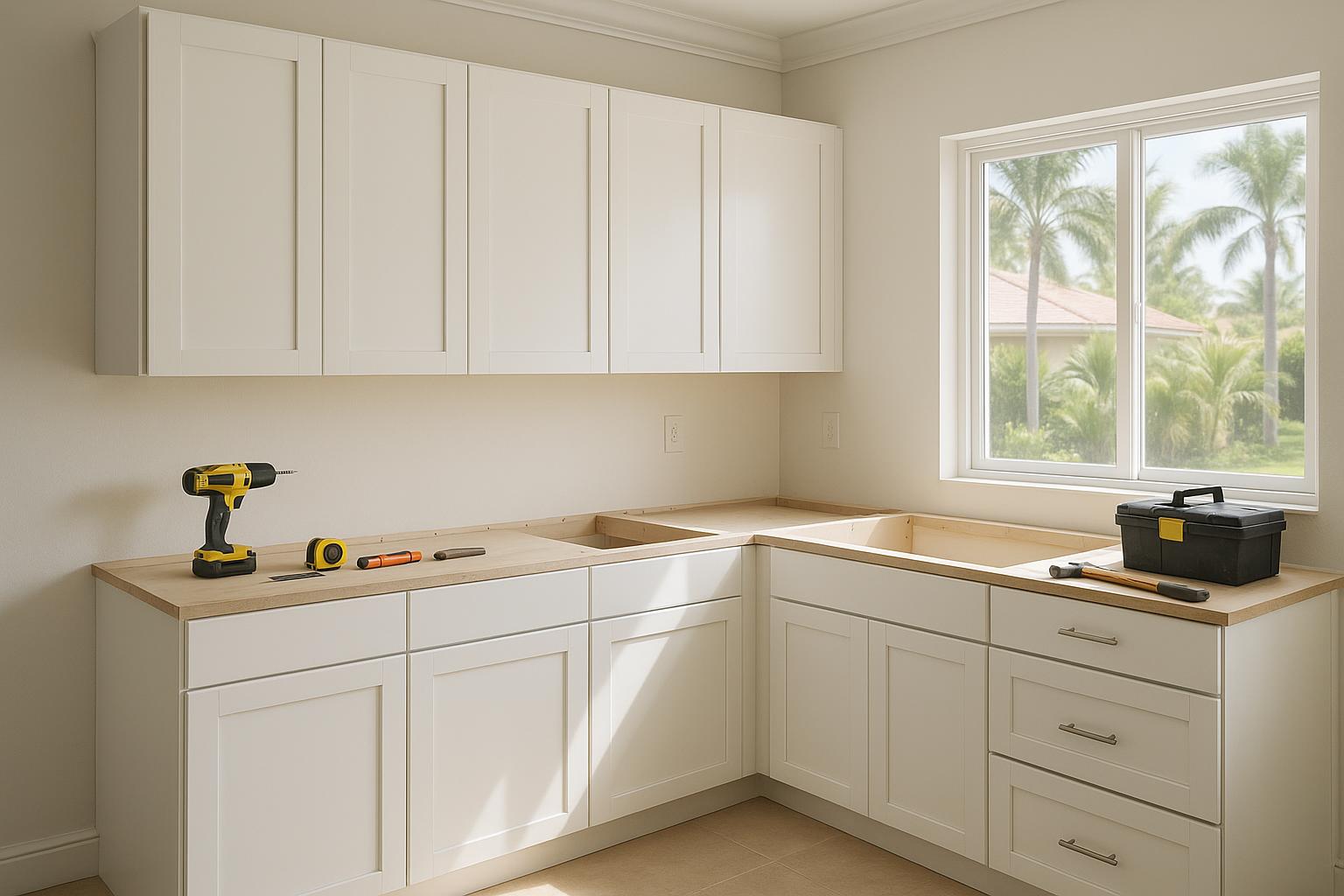
This is when the remodel starts to take shape and excitement builds. Custom cabinetry is carefully installed, leveled, and secured. If your design includes an island, pantry, or specialty storage features, those go in during this phase as well.
Proper cabinet installation is one of the most important steps in the entire remodel. Cabinets that aren't perfectly level will cause problems with doors, drawers, and countertop fit for years to come. This is not a step to rush.
Phase 6: Countertop Fabrication and Installation (1–2 Weeks)
Here's a step that surprises many homeowners: countertops can't be templated until cabinets are fully installed. A fabricator visits your home, takes precise measurements using laser or digital tools, and then cuts your stone, quartz, or solid surface material to fit.
Fabrication typically takes five to ten business days. Installation itself usually takes just one day. Your sink and faucet are often installed at the same time or shortly after.
Phase 7: Backsplash, Flooring, and Finishing (1–2 Weeks)
With cabinets and countertops in place, the finishing details come together:
- Tile backsplash — Installed and grouted, usually taking two to three days depending on the pattern and material.
- Flooring — Whether it's tile, luxury vinyl plank, or another material, flooring is laid and allowed to set.
- Hardware and fixtures — Cabinet handles, drawer pulls, light fixtures, and outlet covers are installed.
- Appliance hookup — Your new or existing appliances are connected and tested.
- Paint touch-ups and final trim — Baseboards, crown molding, and any scuffs or marks from the construction process get addressed.
Phase 8: Final Walkthrough and Punch List (1–2 Days)
A reputable contractor will walk through the finished kitchen with you, item by item. This is your chance to point out anything that needs adjustment — a cabinet door that doesn't close perfectly, a spot that needs another coat of paint, or caulk that needs cleaning up.
This punch list phase is short but important. It's the difference between a remodel that feels almost done and one that feels truly complete.
What Can Affect Your Timeline?
Even with careful planning, some factors can shift the schedule:
- Material delays — Supply chain issues can affect lead times on cabinetry, countertops, and specialty tile. Ordering early helps.
- Permit and inspection scheduling — City offices have their own timelines. Your contractor should factor this in from the start.
- Scope changes — Deciding mid-project to move a wall or upgrade to a different countertop material adds time. Making final decisions during the design phase keeps things moving.
- Unexpected discoveries — Older homes in Hollywood sometimes reveal outdated plumbing, water damage, or electrical issues once walls are opened up. A good contractor communicates these findings quickly and offers solutions.
The Bottom Line
A well-managed kitchen remodel in Hollywood typically takes eight to twelve weeks from demolition to completion, with another two to four weeks of planning and material lead time before that. It's a significant commitment, but understanding the process makes it far less stressful.
At Sterling Point Construction, we walk our clients through every phase before the first hammer swings. We set clear expectations, communicate throughout the project, and deliver kitchens that homeowners are genuinely excited to use. If you're considering a kitchen remodel, reach out for a consultation — we'll give you an honest timeline based on your specific project.