
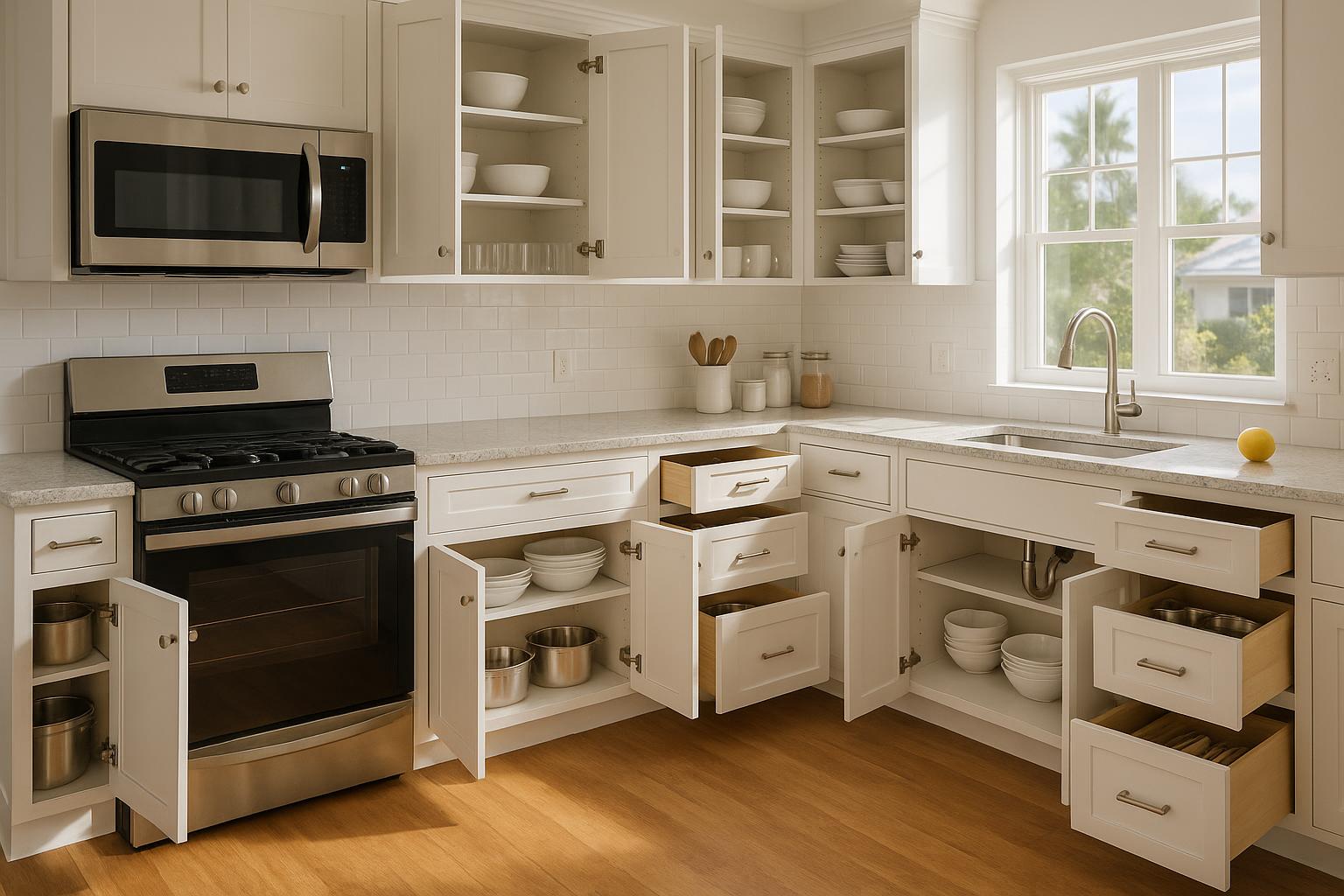
When a Fresh Coat of Paint Won't Cut It
Your kitchen cabinets do more heavy lifting than almost any other feature in your home. They store everything from cast iron skillets to cereal boxes, they endure daily opening and closing, and they set the visual tone for the entire room. So when they start showing their age, the first question most homeowners ask is: Can I just reface these, or do I need to replace them entirely?
Refacing — replacing the doors and drawer fronts while keeping the existing cabinet boxes — can be a smart, cost-effective move in the right situation. But it's not always the right call. In many Hollywood homes, especially those built in the 1970s through 1990s, the cabinet boxes themselves have reached the end of their useful life. Putting new doors on a failing structure is like putting a fresh coat of paint on a crumbling wall.
Here's how to tell when your cabinets need a full replacement and what that process actually looks like.
1. The Cabinet Boxes Are Warped, Swollen, or Soft
South Florida's humidity is tough on cabinetry. If you press on the bottom of a cabinet and it gives, or if you notice the side panels bowing outward, moisture has likely compromised the particleboard or MDF inside. This kind of structural damage can't be fixed by swapping out doors. The entire box needs to go.
Look closely under your kitchen sink — that's usually the first area to show water damage. If the floor of the cabinet feels spongy or you see discoloration and swelling, refacing won't solve the underlying problem.
2. Drawers Stick, Shelves Sag, and Doors Won't Stay Closed
Worn-out hardware is one thing. You can replace hinges and drawer slides relatively easily. But when the cabinet frames themselves are out of square — meaning the boxes have shifted or warped over time — no amount of hardware adjustment will make things work smoothly again.
If you've already tried adjusting hinges and the doors still won't align, or if drawers jam no matter what you do, the structure behind them is the real issue. Replacement gives you a clean slate with properly squared, level cabinet boxes.
3. Your Kitchen Layout Doesn't Work Anymore
This is the sign most homeowners overlook. Refacing keeps your existing layout exactly as it is. If your cabinets are in good structural shape but you're happy with the configuration, refacing makes sense. But if you've been wishing for a pantry cabinet, more drawer storage, or a better flow between the stove and refrigerator, refacing can't help you.
Many older kitchens in Hollywood were designed with layouts that don't match how families cook and live today. Replacing your cabinets gives you the opportunity to rethink the entire floor plan — adding an island, improving counter space, or creating dedicated zones for prep, cooking, and cleanup.
4. You're Already Replacing Countertops or Flooring
If you're planning a broader kitchen remodel that includes new countertops, tile, or flooring, it often makes more financial sense to replace the cabinets at the same time. Here's why: removing and reinstalling countertops to accommodate refacing adds labor costs, and new flooring installed around existing cabinets can create awkward height transitions or gaps.
When everything is done together, your contractor can ensure seamless transitions between the floor, cabinets, and countertops. It also means one project timeline instead of multiple disruptions spread over months or years.
5. You Can See or Smell Mold
This is non-negotiable. If there's visible mold growth inside your cabinet boxes — or a persistent musty smell you can't trace to anything else — those cabinets need to come out. Mold can hide behind cabinet backs and under sink bases where small leaks go unnoticed for months. Refacing would simply cover the problem and allow it to spread.
In a humid climate like ours, mold remediation paired with cabinet replacement is the only responsible approach. New cabinets built with moisture-resistant materials and proper ventilation will hold up far better going forward.
What to Expect When You Replace Kitchen Cabinets
Full cabinet replacement sounds like a major undertaking, and it is — but with the right planning, it doesn't have to be chaotic. Here's a general overview of the process:
- Design consultation: You'll work with your remodeling team to choose a layout, cabinet style, material, and finish. This is where you address all those functional frustrations — not enough storage, poor lighting, wasted corner space.
- Material selection: Custom cabinetry gives you control over everything from wood species to interior organizers. Semi-custom options offer a balance between personalization and budget.
- Demolition and removal: The old cabinets come out, and your contractor inspects the walls and plumbing behind them. This is often when hidden issues like water damage or outdated wiring get discovered and addressed.
- Installation: New cabinets are installed level and plumb, followed by countertops, hardware, and any finishing touches like crown molding or under-cabinet lighting.
- Final walkthrough: Every door, drawer, and hinge is checked. Adjustments are made on the spot so everything functions perfectly before the project is complete.
Custom Cabinetry vs. Stock Cabinets
One of the biggest decisions during a cabinet replacement is whether to go custom or stock. Stock cabinets come in predetermined sizes and finishes. They're more affordable and available faster, but they limit your options — especially if your kitchen has unusual dimensions or you want specific interior features.
Custom cabinetry is built to your exact specifications. For homeowners in Hollywood who want to maximize every inch of kitchen space, custom cabinets allow for solutions like pull-out spice racks, built-in trash and recycling stations, and perfectly fitted corner lazy Susans. The investment is higher, but the result is a kitchen that fits your life precisely.
How to Get Started
If you're noticing any of the signs above, the best first step is to have a professional assess your current cabinets. A qualified remodeling contractor can tell you honestly whether refacing is a viable option or whether replacement is the smarter long-term investment.
At Sterling Point Construction, we help homeowners throughout Hollywood and nearby communities like Pembroke Pines, Hallandale Beach, and Fort Lauderdale make informed decisions about their kitchen remodels. From the initial design conversation through the final walkthrough, we handle every detail so you end up with a kitchen that looks beautiful and works the way you need it to.
If your cabinets are telling you it's time, we're ready to listen. Reach out for a consultation and let's talk about what your kitchen could become.